
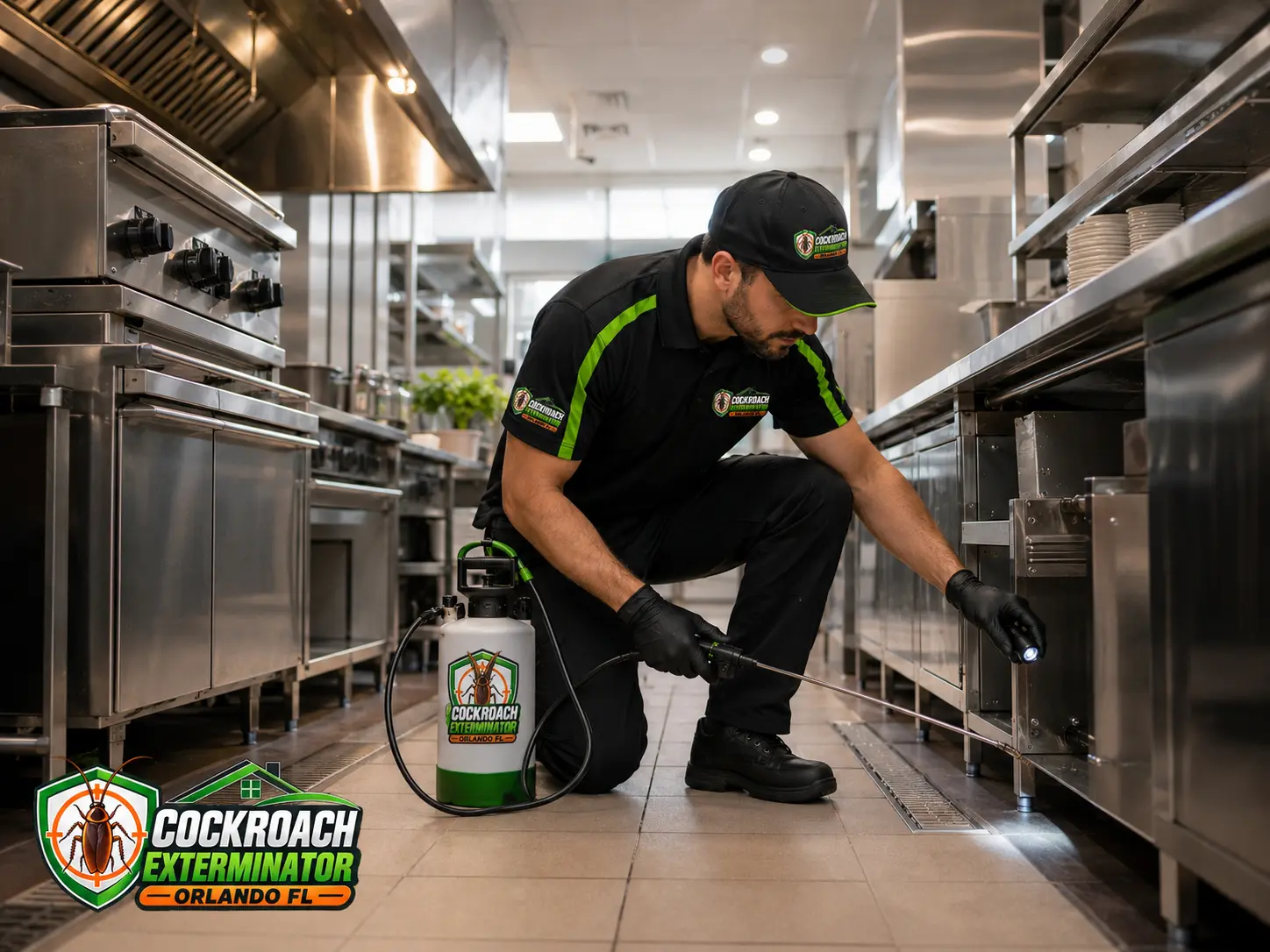
Zones that matter most
Food prep areas
Prep tables, cutting stations and the gaps behind wall-mounted shelving collect residue that is easy to miss during a fast close. Hollow table legs and equipment frames are common harborage.
Dishwashing zones
Warm, wet and continuously in use, dish areas combine everything a roach population needs. Check the machine's base, the surrounding wall junctions and the underside of soiled-dish tables.
Floor drains and grease
Drains that stay damp and carry organic film support activity even when surfaces above look clean. Grease interceptors and the areas around them deserve the same attention.
Equipment voids
Motor compartments, insulation panels, warming units and ice machines hold heat. These are frequently the areas that keep a population going after visible surfaces have been cleaned.
Storage and deliveries
Cardboard arriving on a delivery is one of the more common ways German cockroaches enter a kitchen. Breaking boxes down immediately and storing goods off the floor reduces both harborage and introduction risk.
Waste handling
Interior waste rooms, back-door areas and dumpster pads bring outdoor and indoor pressure together. Lids, cleaning frequency and drainage around the pad all matter.
Why kitchens see repeat activity
Restaurants run hot, wet and continuously, and staff turnover means cleaning habits drift. A problem that appeared solved can resurface when a closing routine changes or a piece of equipment stops getting pulled out.
Deliveries also reintroduce risk regularly, which is why monitoring matters more here than in most settings.
Monitoring as the backbone
Fixed monitors in known hot spots create a simple, checkable record. Rising counts in one station point to harborage nearby; falling counts across stations suggest the plan is working.
That record is also useful internally — it gives kitchen management something concrete to act on rather than anecdotes from different shifts.
Treatment considerations in food-service settings
Targeted work suits kitchens: bait placed into harborage away from food-contact surfaces, crack-and-crevice applications, and treatment of equipment voids, scheduled around service.
Sanitation adjustments are usually part of the plan because they change what the population has to live on. Any products used should be applied according to their label and applicable requirements.
A practical nightly checklist
- Pull and clean under line equipment on a rotating schedule
- Degrease equipment bases, not just surfaces
- Flush and clean floor drains regularly
- Break down cardboard and remove it before close
- Empty and clean interior waste containers nightly
- Report new sightings with location and time so patterns are visible