Property types this covers
- Restaurants, cafés, bars and commercial kitchens
- Offices with break rooms and shared kitchenettes
- Retail spaces, especially those with stockrooms
- Warehouses and dry storage facilities
- Multi-tenant buildings and mixed-use properties
- Common areas, waste enclosures and loading zones
Where activity concentrates in commercial buildings
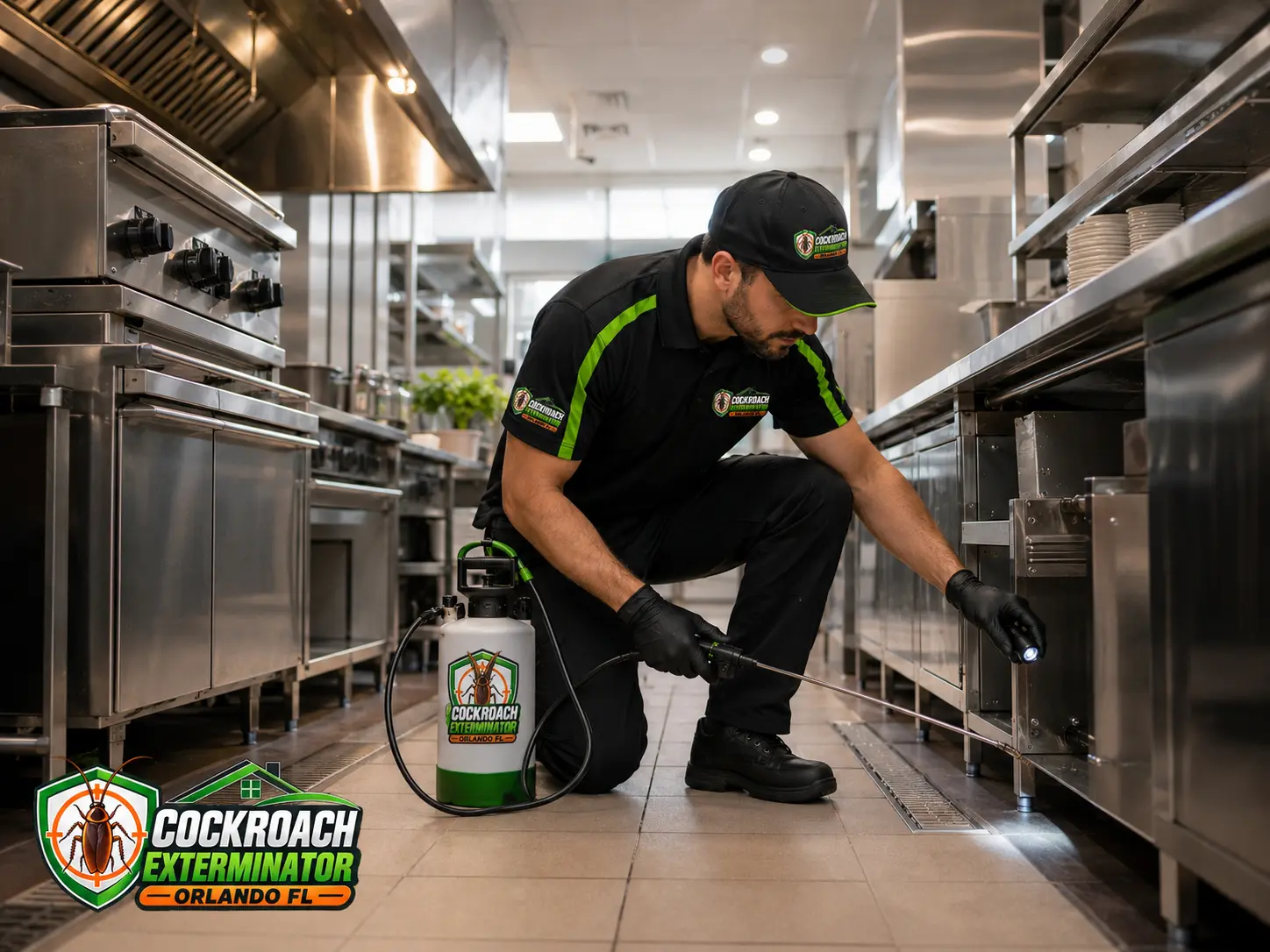
Commercial spaces offer far more harborage than a typical home: equipment voids, cable trays, false ceilings, warm motor housings and continuous access to water.
Break rooms are a frequent starting point in offices — a shared microwave, a refrigerator that has never been pulled out, and cardboard delivery boxes create everything a small population needs.
- Equipment bases, motor compartments and cable chases
- Floor drains, mop sinks and dishwashing areas
- Dry storage shelving and delivered cardboard
- Break rooms, vending areas and coffee stations
- Waste rooms, dumpster pads and grease containment
- Shared walls and plumbing chases between tenant spaces
Inspection and monitoring
A commercial inspection normally maps the property rather than reacting to one sighting: entry and delivery points, storage flow, sanitation practices, moisture sources and the areas staff have reported.
Monitors placed at fixed points give a record of activity over time. That record is what turns "we still see them sometimes" into a specific location and trend, and it is also what shows whether a change in sanitation or a treatment adjustment worked.
Sanitation coordination
No treatment program competes well against a continuous food and moisture supply. In practice, the most useful commercial work pairs treatment with a short, specific list for the operations team.
- Nightly cleaning under and behind equipment, not just visible surfaces
- Breaking down and removing cardboard promptly after deliveries
- Keeping mop sinks, drains and grease areas cleaned on a schedule
- Fixing leaks and condensation quickly
- Storing dry goods off the floor and sealed
- Managing waste enclosure cleanliness and lid closure
Treatment considerations for occupied businesses
Targeted approaches — baiting into harborage, crack-and-crevice work, and treatment of equipment voids — tend to suit occupied spaces better than broad application, both operationally and practically.
Scheduling usually works around service hours. In multi-tenant buildings, coordinating adjacent spaces matters, since activity can move through shared voids regardless of who is treated.
Any products used should be applied according to their label and applicable requirements. Treatment recommendations depend on the property, infestation and pest species.
What to have ready when you call
- Property type, square footage and number of affected areas
- Where staff are seeing activity, and at what times
- Whether food is prepared, stored or served on site
- Operating hours and when access is practical
- Whether neighboring tenants have reported activity
- Any previous treatment history at the property