
Species identification
Small light-brown roaches breeding indoors call for a very different plan than large roaches entering from landscaping or drains. Identification usually relies on the insect itself, the location of activity, and the evidence left behind.
Where no live roaches are available, droppings, shed skins and egg cases often narrow it down.
Mapping activity and harborage
- Kitchen cabinet voids, hinges and back panels
- Appliance motor housings and insulation
- Sink and toilet plumbing penetrations
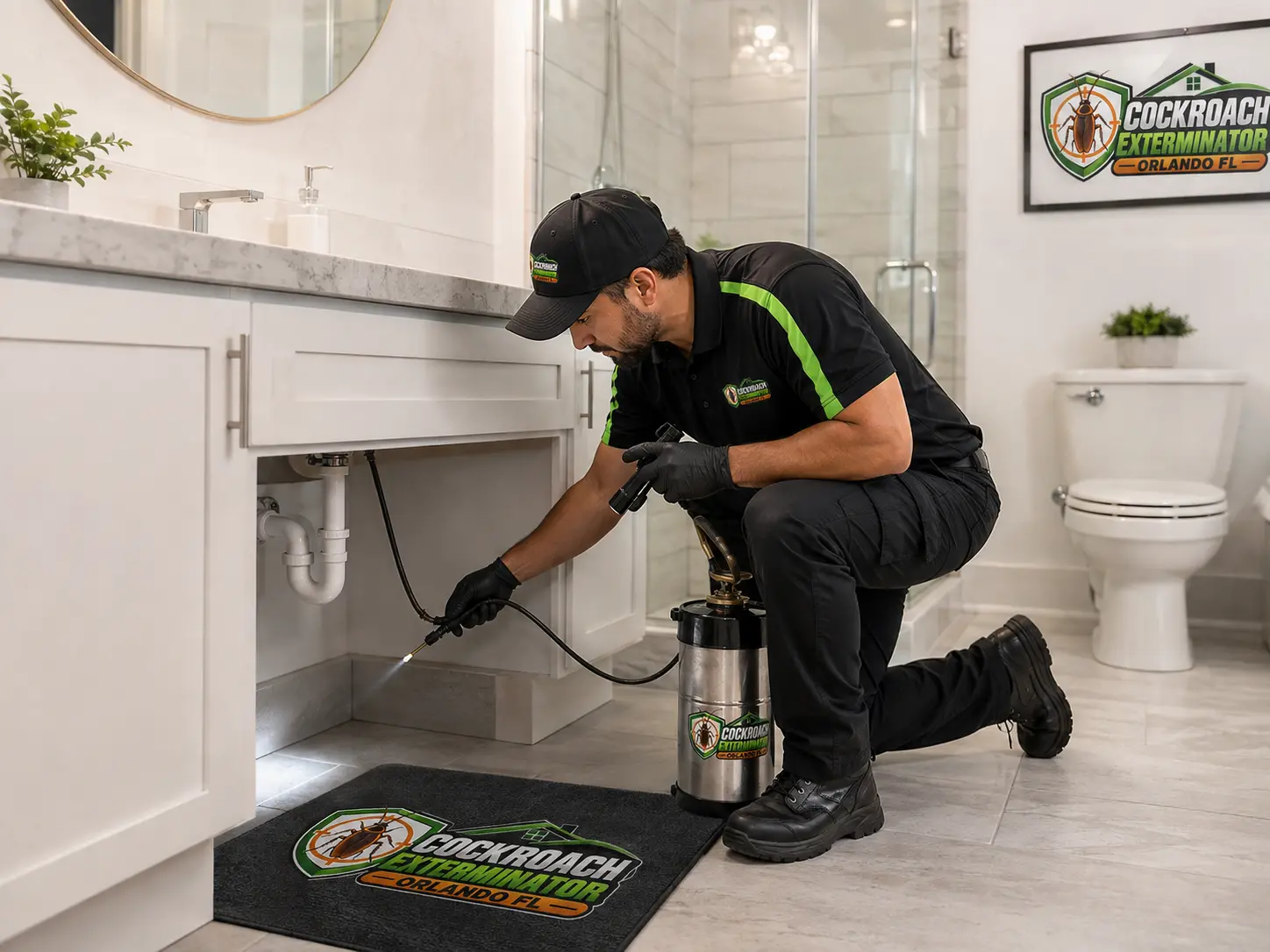
- Bathroom vanities and damp wall voids
- Garages, laundry rooms and water heater closets
- Floor drains, mop sinks and utility trenches
- Exterior foundation, mulch, meter boxes and door thresholds
Evidence an inspection looks for
Droppings
Small roaches leave specks resembling ground pepper along edges and corners. Larger species leave bigger, more cylindrical droppings, often in utility spaces.
Egg cases
Casings — empty or intact — indicate reproduction on site rather than occasional entry, which changes how follow-up is planned.
Shed skins and staining
Cast skins near harborage and dark smear marks along runways help locate where a population spends time.
Odor
A persistent musty smell in an enclosed space can accompany larger populations, though it is not a reliable measure on its own.
Moisture, food sources and entry points
Conditions explain persistence. A slow leak, condensation on a supply line, irrigation running against the foundation or standing water in a mop area can sustain activity even after treatment.
Entry points matter most where roaches are coming from outside: door sweeps, utility penetrations, dry floor drains, vents and weep holes are checked routinely.
Monitor placement and measuring change
Sticky monitors placed at suspected harborage produce something better than impressions: counts. Over a week, they show where activity concentrates and whether it is trending down after treatment.
Left in place between visits, monitors become the ongoing record of how the home is trending.
How scope gets determined
Findings drive scope. A limited population in one kitchen cabinet is a different job than activity across several rooms or a building with shared plumbing between units.
The inspection result is also what makes any estimate meaningful — property size, affected areas, species and severity all feed into it. Treatment recommendations depend on the property, infestation and pest species.