
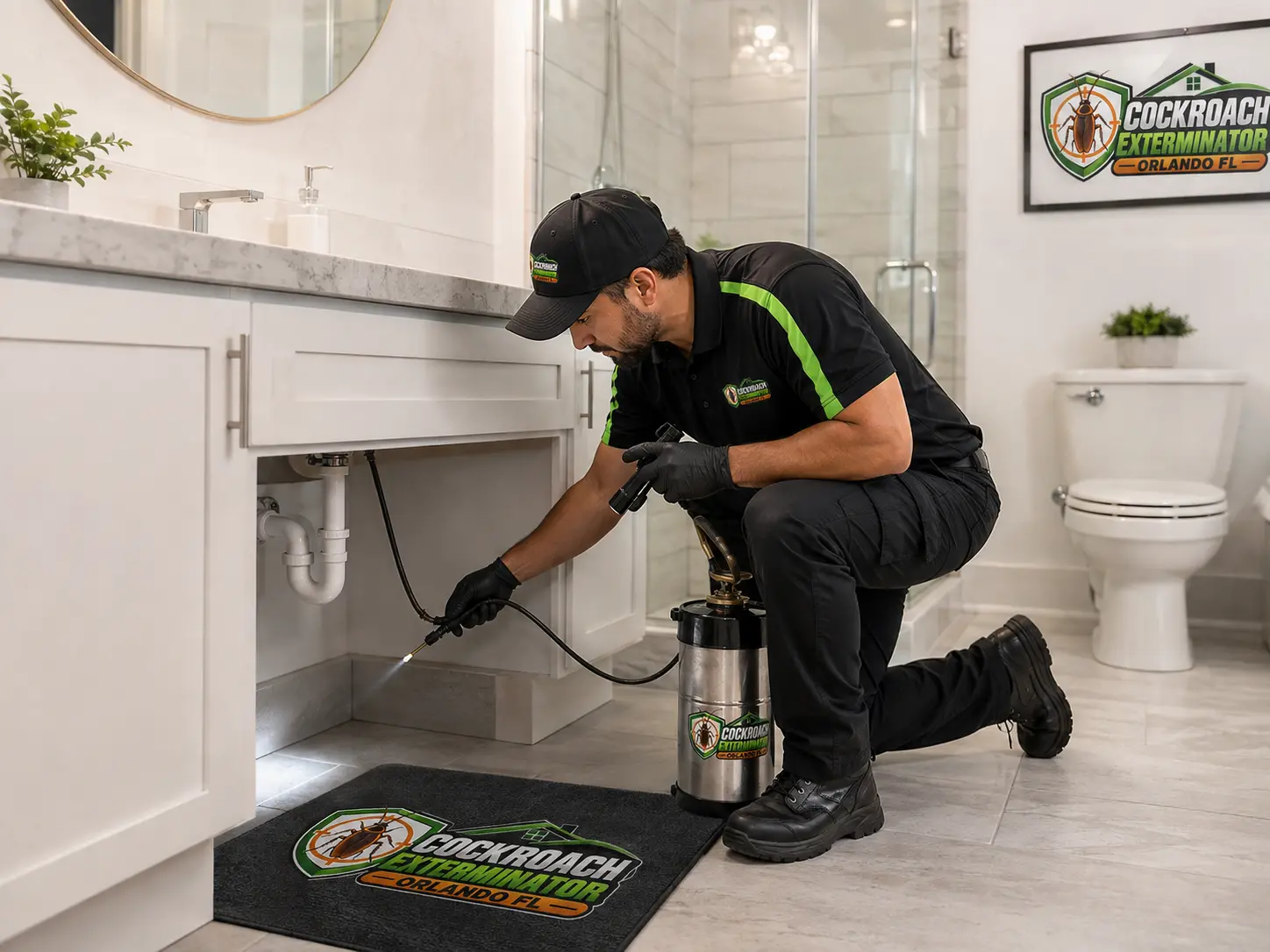
Why the bathroom specifically
Cockroaches need water more urgently than food. A bathroom supplies it constantly — condensation on the tank, a slow supply-line drip, standing water in a shower base and elevated humidity after every shower.
In Central Florida, ambient humidity means bathrooms dry out slowly, especially where an exhaust fan is weak or unused.
Where they hide
- Vanity cabinet interiors, especially the damp cabinet base
- Gaps where supply and drain lines pass through the wall or floor
- Behind and beneath the toilet at the floor flange
- Wall voids adjacent to the shower or tub
- Overflow and drain areas
- Medicine cabinets and recessed shelving
- Access panels for tub plumbing
Plumbing penetrations and wall voids
The unsealed opening around a pipe is the single most common bathroom pathway. It connects the room to warm, damp voids inside the wall — and, in attached housing, to neighboring units.
Sealing those gaps with an appropriate material is one of the more effective, lowest-risk steps available to a property owner.
Drains and what lives in them
Organic film builds inside drain lines and provides both food and moisture. Rarely used drains — a guest shower, a floor drain in a utility bath — can also lose their trap seal, opening a direct route from the plumbing system.
Running water through unused drains periodically restores the seal.
Which species you are likely seeing
Small light-brown roaches in a bathroom usually indicate an indoor-breeding population — see German cockroach control. Large reddish-brown roaches appearing at night, often near a drain, more often point to American cockroaches moving in from plumbing or exterior harborage.
The distinction determines whether interior harborage work or exclusion and exterior work should lead.
Practical steps and treatment
Professional work in bathrooms generally focuses on harborage and penetration points rather than open surfaces. An inspection confirms the species and locates the voids involved; treatment then targets those areas directly.
- Repair drips, running toilets and sweating supply lines
- Run the exhaust fan during and after showers
- Seal gaps around plumbing penetrations
- Dry the shower base and sink after use where activity is heavy
- Clear damp storage and cardboard from the vanity
- Pour water into unused drains monthly