
What people usually mean by the term
Used loosely, the name covers several large cockroach species found around Central Florida properties. What those roaches share is more useful than the label: they prefer warm, humid harborage, they are largely outdoor-oriented, and they enter buildings through gaps rather than breeding in kitchen cabinets the way German cockroaches do.
Because the term is imprecise, an accurate identification during inspection usually changes what gets recommended.
Why Central Florida supports them year-round
Warm temperatures, high humidity, frequent summer rainfall and abundant organic material create suitable outdoor harborage for much of the year. Palms, mulch beds, tree holes, leaf litter and irrigated landscaping all hold moisture.
Dense residential development adds homes with warm utility spaces and reliable water — attractive shelter when outdoor conditions swing wet or dry.
Common outdoor harborage
- Palm boots, tree holes and accumulated frond debris
- Thick mulch, especially where it contacts the foundation
- Irrigation-damp beds and dense ground cover
- Meter boxes, valve boxes and utility vaults
- Woodpiles, pavers and stored materials against the wall line
- Storm drains and low areas that hold water after rain
How they get indoors
- Garage doors with worn or uneven bottom seals
- Front and rear door thresholds with visible daylight gaps
- Unsealed plumbing, cable and A/C line penetrations
- Attic vents and soffits with damaged screening
- Dryer vents that no longer close properly
- Floor drains and utility openings in laundry and mechanical rooms
Inspection considerations
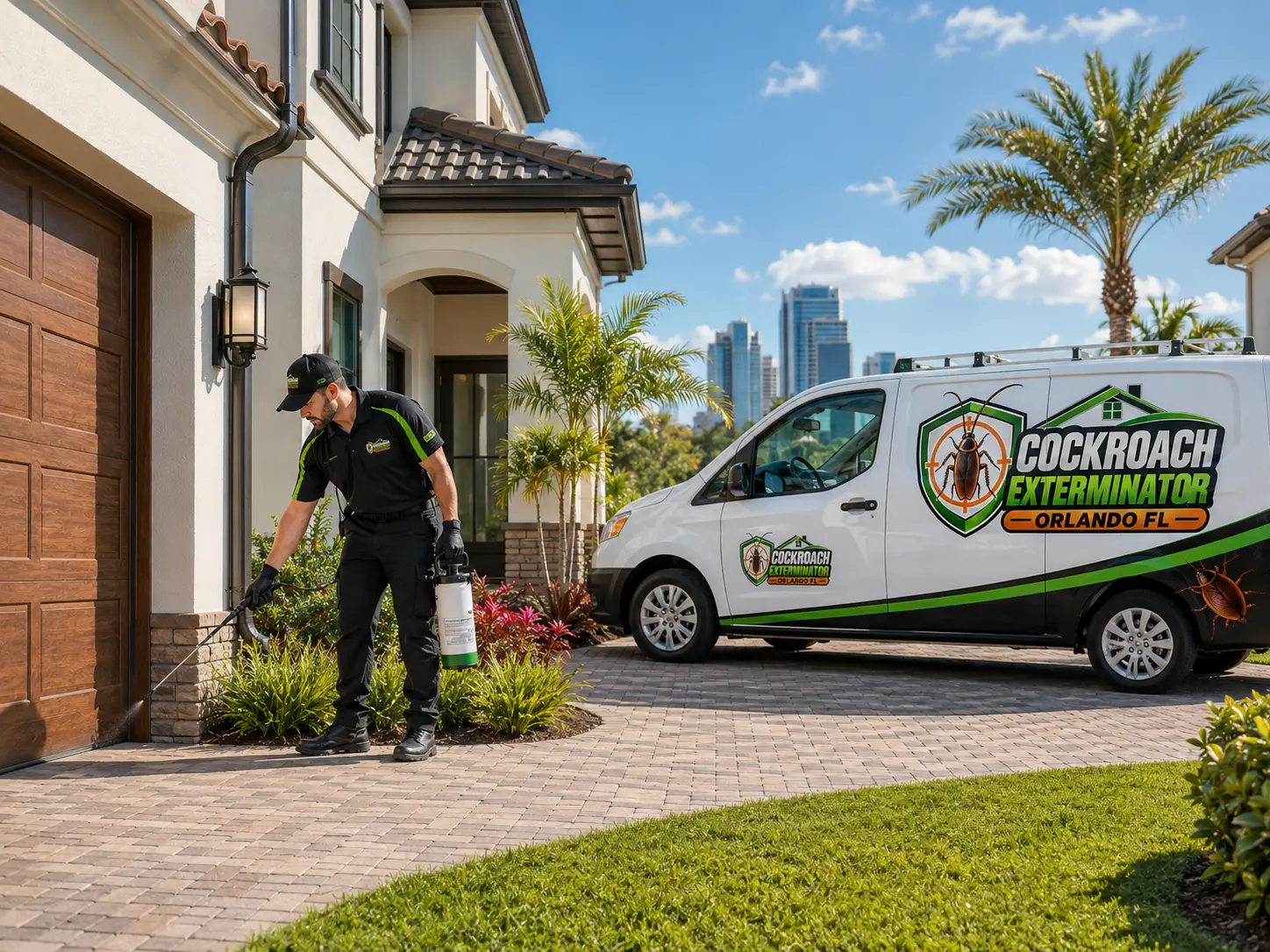
An inspection generally starts at the exterior: harborage in landscaping, moisture at the foundation, the condition of door sweeps, and the state of utility penetrations. Interior work focuses on garages, laundry rooms, water heater closets and bathrooms where sightings occur.
Confirming whether roaches are living inside or entering from outside is the central question, because it determines whether exclusion and exterior work or interior harborage treatment should lead.
Treatment and prevention approach
Typical work combines exterior harborage reduction, perimeter treatment where appropriate, targeted applications at entry points and interior harborage, bait placement in utility spaces, and sealing of the gaps that allow entry.
Prevention is largely mechanical: better door seals, sealed penetrations, drier landscaping at the wall line and cleaned-up debris. Products should be used according to their label and applicable requirements.