
Identification, and why it changes the plan
Adults are among the largest roaches found in Florida structures — reddish-brown, glossy, with a pale figure-eight-shaped marking behind the head. They are strong runners and capable of gliding short distances, which is why encounters feel dramatic.
Species identification matters because control strategy differs. A population living in a sewer line, mulch bed or crawl area calls for very different work than a German cockroach population breeding inside a kitchen cabinet. Treating one as though it were the other wastes effort.
Where American cockroaches harbor
- Floor drains, sewer lines and utility trenches
- Water heater closets, laundry areas and utility rooms
- Garages, especially near door thresholds and stored cardboard
- Wall voids adjacent to plumbing chases
- Mulch beds, palm debris, tree holes and irrigation-damp landscaping
- Storm drains and valve boxes near the foundation
How they get inside
Most American cockroach sightings indoors start outside. Warm, wet weather increases activity, and heavy Central Florida rain can push roaches out of saturated ground harborage and toward buildings.
Entry points are usually mundane: a worn door sweep, an unsealed pipe penetration, a dryer vent gap, or a floor drain that has lost its water seal from disuse.
- Gaps under garage and exterior doors
- Utility and plumbing penetrations that were never sealed
- Dry floor drains and unused traps
- Attic and soffit vents without intact screening
- Weep holes and expansion gaps in masonry
Moisture and landscaping factors
Irrigation that runs against the foundation, thick mulch piled to the wall line, and dense ground cover all create the humid harborage this species prefers. Roof drainage that empties next to the slab has the same effect.
Reducing those conditions rarely eliminates a population on its own, but it usually lowers pressure at the building line and makes treatment more durable.
What an inspection usually covers
An inspection for large roaches tends to work from the outside in: the foundation line, landscaping, utility penetrations, garage thresholds and drainage, then interior utility spaces, drains and wall voids where activity is being reported.
Monitors placed in garages, laundry rooms and mechanical spaces help confirm whether activity is continuous or weather-driven.
How treatment is usually approached
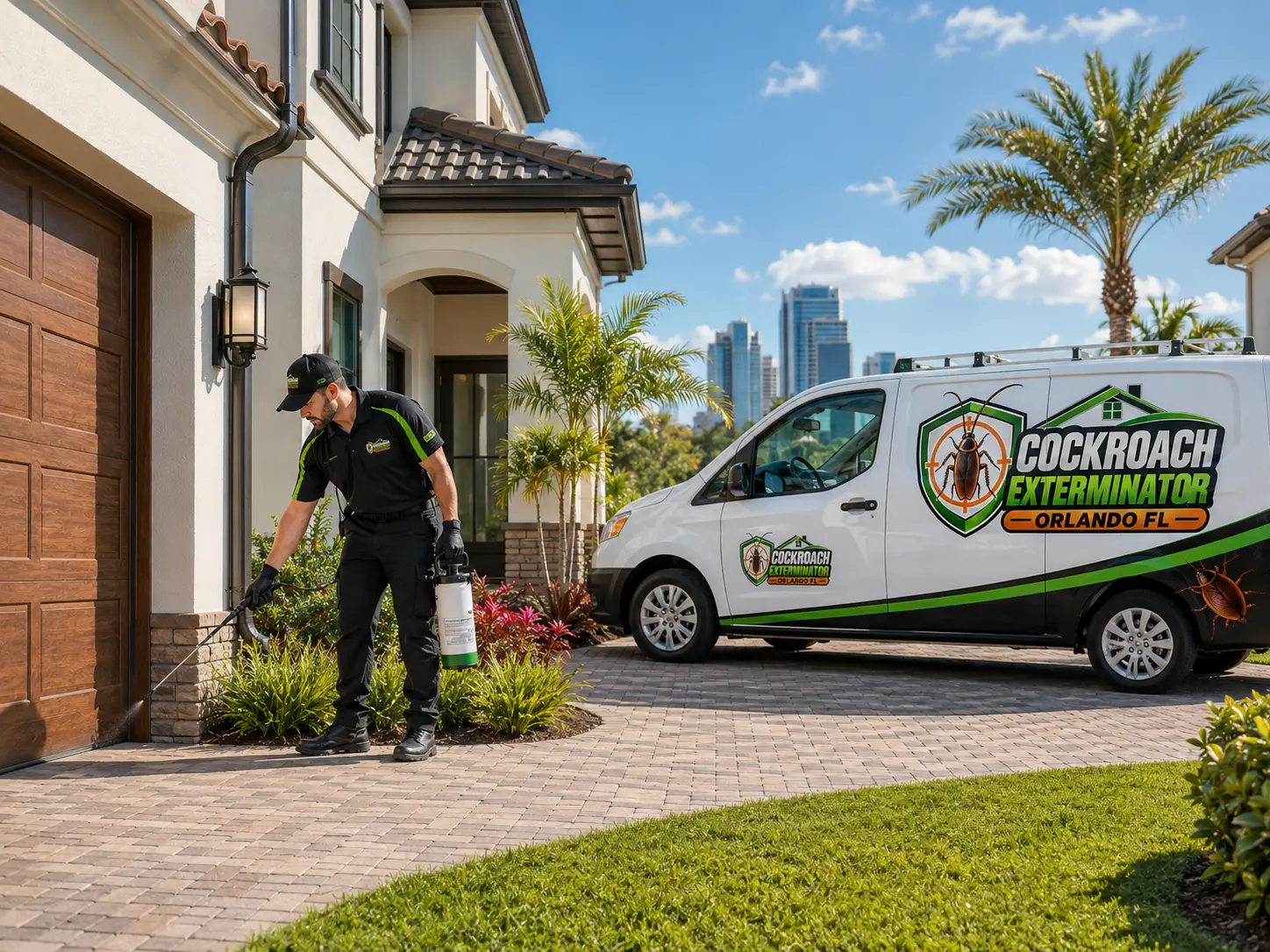
Work commonly combines exterior perimeter treatment where appropriate, targeted applications into harborage and crack-and-crevice areas, bait placement in utility spaces, drain and moisture recommendations, and exclusion of the openings that let roaches in.
Because populations often live outdoors, follow-up and seasonal attention are common. Products should be used according to their label and applicable requirements, and no outcome can be guaranteed.
Practical steps for property owners
- Replace worn door sweeps on garage and exterior doors
- Seal utility, plumbing and cable penetrations at the wall line
- Pour water into rarely used floor drains to restore the trap seal
- Pull mulch back from the foundation and thin dense ground cover
- Redirect downspouts and irrigation away from the slab
- Store firewood, cardboard and yard debris away from the structure