Step one: inspection and identification
Everything downstream depends on this. Species determines whether the work should focus on indoor harborage or on exterior harborage and entry points, and inspection determines which areas actually need attention.
See cockroach inspection for what this stage typically covers.
Step two: sanitation and moisture recommendations
Removing what sustains a population makes every other step more effective. These recommendations are specific to what the inspection found rather than generic advice.
- Cleaning grease and residue from appliance voids and cabinet edges
- Sealing dry goods and pet food
- Repairing leaks, condensation and drainage issues
- Clearing cardboard and paper clutter
- Adjusting waste handling and storage practices
Step three: targeted baiting
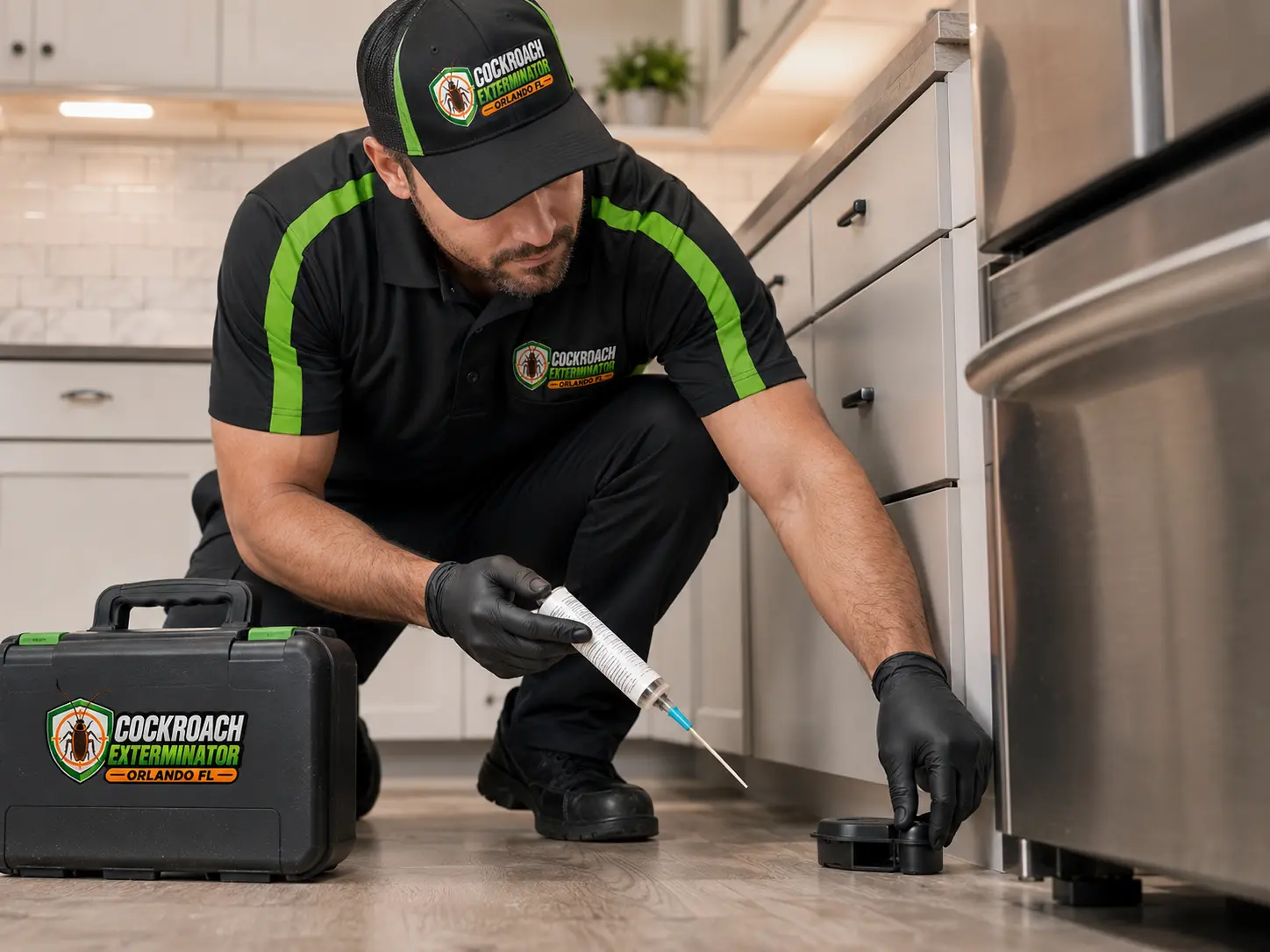
Bait placed directly into harborage lets roaches carry material back where the population lives. For indoor-breeding species this is usually the core of the work, because it reaches voids that surface treatment never touches.
Spraying over bait can render it unattractive, which is one reason mixing DIY sprays with a professional bait program often backfires.
Step four: crack-and-crevice applications
Where appropriate, materials are applied precisely into the gaps, voids and equipment spaces that roaches use, rather than across open surfaces. That keeps material where it is useful and away from areas people contact.
Step five: exclusion and exterior work
For large roaches entering from outside, sealing entry points and reducing exterior harborage often matters more than anything applied indoors. Exterior perimeter treatment may be used where the situation calls for it.
- Door sweeps and threshold gaps
- Plumbing, cable and A/C line penetrations
- Vent screening and weep holes
- Mulch, ground cover and irrigation at the foundation
- Dry floor drains that have lost their trap seal
Step six: monitoring and follow-up
Monitors placed during treatment give a measurable baseline. Because egg cases present at the start are not affected the same way live roaches are, a follow-up visit after hatching is common — particularly with German cockroaches.
Ongoing service is common in apartments and condos, where reintroduction pressure from neighboring units never fully goes away.
Safety and product use
This site does not publish pesticide concentrations, mixing instructions or application recipes. Products should be used strictly according to their label and applicable requirements, and applications in occupied homes and food-handling environments carry specific requirements.
Lower-risk steps property owners can take on their own — cleaning, sealing food, fixing leaks, removing cardboard and closing gaps — are covered in how to get rid of cockroaches.